

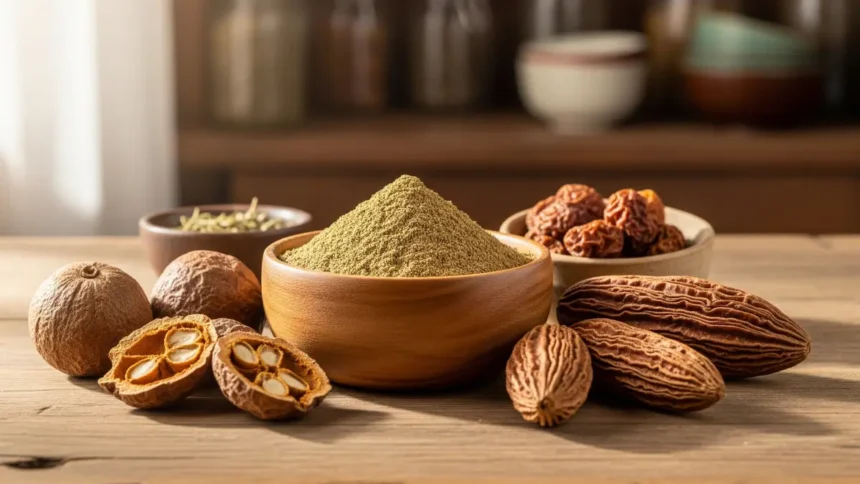
The word “detox” has become a loaded term in our modern wellness culture. It often conjures images of extreme fasts, harsh cleanses, and punishing liquid diets. We are led to believe that purging the body requires an aggressive, short-term assault. Ayurveda, however, offers a profoundly different and wiser perspective. It teaches us that true detoxification isn’t a battle; it’s a gentle, consistent process of supporting the body’s own innate intelligence to cleanse and heal itself.
At the very heart of this gentle approach is a humble, yet remarkably powerful, herbal formula: Triphala.
For thousands of years, this simple blend of three dried fruits has been Ayurveda’s most trusted ally for digestive health and systemic rejuvenation. This guide will walk you through how to take Triphala powder effectively, not as a harsh purge, but as a daily ritual to gently cleanse your system, strengthen your digestion, and restore a fundamental sense of balance.
What Exactly is Triphala? The “Three Fruits”
Triphala, in Sanskrit, literally means “three fruits” (tri = three, phala = fruit). It is a precise combination of three revered superfruits native to India, each with its own unique therapeutic profile.
- Amalaki (Emblica officinalis): Also known as Indian Gooseberry, Amalaki is one of the richest known sources of Vitamin C. It is a powerful antioxidant and is deeply cooling in nature, making it excellent for pacifying Pitta dosha and soothing inflammation in the digestive tract.
- Bibhitaki (Terminalia bellirica): This fruit is particularly effective for balancing Kapha dosha. It has astringent properties that help to scrape excess mucus and fat from the system, and it is known for its supportive role in the respiratory system.
- Haritaki (Terminalia chebula): Revered in Tibetan medicine as the “King of Herbs,” Haritaki is known to balance Vata dosha. It has a gentle scraping action on the intestines, promoting healthy elimination and improving nutrient absorption.
The genius of this formula is that it is Tridoshic—it gently balances all three doshas simultaneously, making it suitable and beneficial for almost everyone.
The Ayurvedic View: How Triphala Gently Detoxifies
To understand how Triphala works, we must first understand the Ayurvedic concept of detoxification. Health begins with a strong digestive fire, or Agni. When our Agni is robust, we efficiently digest food, absorb nutrients, and eliminate waste.
When Agni is weak, however, undigested food particles linger in the system, creating a sticky, toxic residue known as Ama. This Ama is considered the root cause of most diseases. It clogs the body’s channels (srotas), hinders nutrient absorption, and creates a breeding ground for illness.
Triphala’s primary action is to support Agni and gently scrape Ama from the walls of the digestive tract. It is not a harsh laxative that artificially stimulates the colon. Instead, it works by:
- Toning the muscles of the digestive system to promote natural, regular bowel movements.
- Cleansing the colon of accumulated Ama.
- Supporting the liver’s natural detoxification processes.
- Improving the absorption of nutrients from your food.
This makes it a true digestive tonic, one that strengthens the system rather than just forcing a temporary cleanse.
A Step-by-Step Guide: How to Take Triphala Powder
Taking Triphala powder is a simple process, but the timing and preparation can be adjusted depending on your primary goal.
The Basic Preparation
The most traditional and effective method is to take Triphala as a tea.
- Dosage: Start with 1/2 teaspoon of Triphala powder. You can gradually increase to 1 teaspoon as your body adjusts.
- Method: Mix the powder into a cup (about 8 oz or 240 ml) of warm water. Stir well until it is mostly dissolved. Let it sit for a minute or two for any remaining powder to settle.
The All-Important Question: When to Take It?
1. For Gentle Cleansing & Constipation Relief (Most Common Method):
- When: Take your Triphala tea about 30 minutes before bedtime.
- Why: Taking it at night allows the herbs to work gently with your body’s natural cleansing cycles while you sleep. It helps to tone the colon overnight, typically resulting in a complete and satisfying elimination the next morning. This is the recommended method for anyone dealing with constipation or seeking a gentle daily detox.
2. For Deeper Rejuvenation & Nutritional Support:
- When: Take your Triphala tea first thing in the morning on an empty stomach.
- Why: When taken in the morning, the body absorbs more of Triphala’s nutritive and antioxidant properties, acting as a Rasayana (rejuvenator). This method is less about laxation and more about nourishing the tissues and supporting overall vitality.
Tips for a Better Experience
- Managing the Taste: Triphala is famous for its complex and strong taste, which is a key part of its therapeutic action. However, it can be challenging for beginners. You can add a small amount (1/2 tsp) of raw honey (after the water has cooled slightly) or a splash of fresh lemon juice to make it more palatable.
- The Capsule Alternative: If you simply cannot tolerate the taste, Triphala is available in capsule form. While convenient, the Ayurvedic tradition holds that tasting the herbs is an important part of the healing process, as it sends signals to the digestive system. If possible, try to start with the powder.
Who Should Be Cautious?
While Triphala is remarkably safe and balanced, there are a few situations where caution is advised.
- Pregnancy & Breastfeeding: Triphala has a “downward-moving” energy and is generally not recommended during pregnancy. Consult a practitioner if you are breastfeeding.
- Diarrhea or Dehydration: Because of its cleansing nature, it should not be taken during acute episodes of diarrhea or if you are dehydrated.
- Taking Medications: If you are on any prescription medications, it’s always best to consult with your doctor or a qualified Ayurvedic practitioner before starting any new herbal regimen.
A Daily Ally for Your Health
Learning how to take Triphala powder is an invitation to partner with one of Ayurveda’s most trusted allies. It is not a quick fix or a dramatic purge. It is a gentle, consistent supporter of your body’s natural intelligence—a simple, daily ritual that cleanses, tones, and rejuvenates from the inside out, forming a sustainable foundation for lasting health.
Medical Disclaimer : The content on this Site is for informational purposes only and is not intended to be a substitute for professional medical advice, diagnosis, or treatment.Always seek the advice of your physician or another qualified health provider with any questions you may have regarding your health or a medical condition.Never disregard professional medical advice or delay in seeking it because of something you have read, seen, or interpreted on this website.