

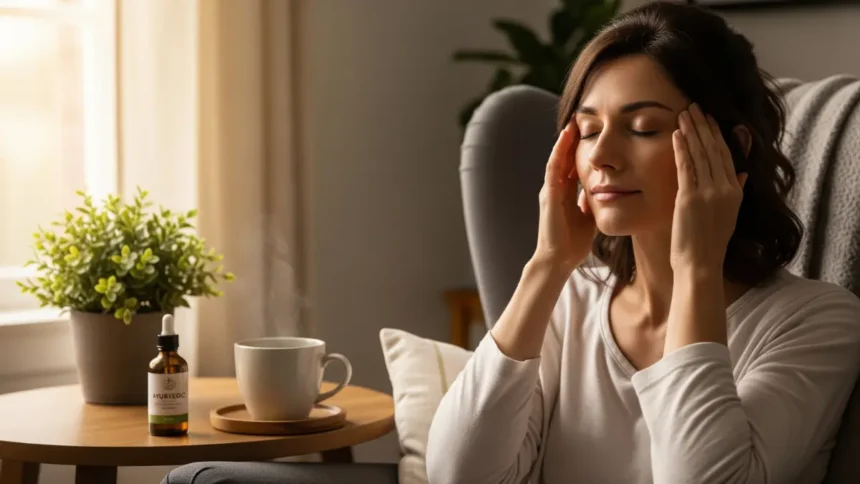
When tension headaches grip your temples like an invisible band tightening around your head, leaving you feeling drained and desperate for relief, ancient Ayurvedic wisdom offers gentle yet powerful solutions that treat both the pain and the deeper imbalances that keep these headaches returning.
Tension headaches affect nearly 90% of people at some point, making them the most common type of headache. While conventional medicine focuses on pain suppression, Ayurveda understands tension headaches as manifestations of Vata dosha imbalance in the nervous system. Known as Vataja Shirahshool in classical texts, these headaches reflect stress, anxiety, and lifestyle factors that disturb natural energy flow in your head and neck.
Understanding Tension Headaches Through Ayurvedic Eyes
In Ayurvedic understanding, tension headaches primarily result from Vata dosha imbalance affecting nervous tissue and the channels carrying life force. This explains why tension headaches often accompany periods of mental strain, irregular schedules, poor sleep, or excessive stress.
Classic symptoms include dull, aching, or throbbing pain that moves around your head, often with neck and shoulder tension. Pain typically worsens with stress, fatigue, hunger, or cold, dry weather. Related symptoms include restlessness, anxiety, difficulty concentrating, and irregular digestion.
Contributing factors include irregular eating patterns, excessive mental work, poor posture, and inadequate rest. These factors increase Vata dosha while depleting vital immunity, creating perfect conditions for chronic headache patterns.
Powerful Herbal Allies
Brahmi: The Nervous System Rejuvenator
Brahmi (Bacopa monnieri) stands as Ayurveda’s premier herb for nervous system health, specifically targeting mental stress and anxiety that often trigger tension headaches. This cooling herb strengthens nervous tissue while providing natural stress adaptation.
External use: Warm Brahmi oil and massage gently into scalp, temples, and neck before bed. This traditional practice nourishes nervous tissue while promoting restorative sleep.
Internal use: Mix ½ teaspoon Brahmi powder with warm water or honey twice daily. Regular use builds nervous system resilience while reducing headache frequency and intensity.
Jatamansi: The Mind Calmer
Jatamansi (Nardostachys jatamansi) specifically targets stress-related headaches while providing natural sedative effects that calm overactive mental processes. This cooling herb has been used for centuries to treat headaches caused by mental stress.
Preparation: Take ¼ teaspoon Jatamansi powder with warm water before bed. Its calming properties help break the stress-tension cycle that perpetuates chronic headaches.
Essential Treatment Methods
| Headache Type | Primary Treatment | Application |
|---|---|---|
| Stress-Related | Brahmi oil head massage | Warm oil, circular motions, 15 minutes |
| Neck Tension | Sesame oil massage | Focus on neck/shoulders, before bath |
| Mental Fatigue | Complete rest with oil | Quiet room, minimal stimulation |
Abhyanga: Therapeutic Oil Massage
Sesame oil massage provides immediate relief and long-term prevention by improving circulation, releasing muscle tension, and nourishing nervous system tissues. Warm pure sesame oil provides grounding energy that specifically calms Vata dosha.
Technique: Massage in slow, circular motions starting from scalp, focusing on temples, moving down to neck and shoulders for 15-20 minutes. Allow oil to penetrate for 30 minutes before bathing with warm water.
Enhanced oils: Mahanarayana oil combines multiple herbs for muscle and nerve pain relief. Ksheerabala oil provides deeper nervous system nourishment for chronic patterns.
Nasya: Nasal Therapy
Nasya karma involves administering medicated oils through nasal passages to directly treat head-related disorders. This therapy clears blocked channels while nourishing nervous tissue through direct absorption.
Method: Place 2-3 drops of warm Anu oil in each nostril while lying with head tilted back. Inhale gently and remain lying for 2-3 minutes. Perform mornings after oral hygiene.
Dietary Support and Lifestyle
Vata-pacifying foods prevent underlying imbalances creating tension headaches. Focus on warm, oily, moist, nourishing foods like cooked grains, soups, warm milk with spices, nuts, and ghee.
Regular meal timing prevents blood sugar fluctuations and hunger-related headaches. Eat your largest meal at midday when digestive fire is strongest. Avoid skipping meals, which directly aggravates Vata.
Foods to minimize include excessive caffeine, cold or frozen foods, processed snacks, and irregular eating times—all directly aggravate Vata dosha.
Stress Management
Quality sleep remains essential for nervous system recovery. Establish consistent sleep and wake times to support healthy Vata functioning.
Pranayama practice: Nadi Shodhana (alternate nostril breathing) for 10-15 minutes helps balance the nervous system while providing immediate headache relief.
Regular meditation for 10-15 minutes daily builds resilience against stress-induced headaches. Yoga Nidra is particularly effective for deep nervous system restoration.
Professional Therapies
Shirodhara: Ultimate Nervous System Therapy
Shirodhara involves continuously pouring warm medicated oil over forehead and scalp for 30-45 minutes. This profound therapy directly calms the nervous system while providing deep brain tissue nourishment.
Benefits: Immediate stress relief, improved sleep quality, enhanced mental clarity, and significant reduction in headache frequency with regular treatments.
Shirobasti: Oil Pooling Therapy
Shirobasti creates a reservoir of warm medicated oil around the head using a specially designed cap. Oil remains in contact with scalp for extended periods, providing intense nervous tissue nourishment.
Creating Your Healing Protocol
Daily Prevention
- Morning: Gentle stretching, pranayama, regular breakfast
- Throughout day: Proper posture, regular breaks, adequate hydration
- Evening: Oil massage, stress reduction, light dinner
- Bedtime: Consistent schedule, calming herbs
Acute Episode Management
- Immediate: Find quiet space, slow deep breathing
- Within 30 minutes: Apply warm oil to temples and neck
- Rest period: Minimal light and sound, gentle massage
- Recovery: Avoid returning to stress too quickly
Timeline for Healing
Immediate relief (30-60 minutes): Oil massage, breathing practices, and rest provide significant pain reduction during acute episodes.
Short-term improvement (1-2 weeks): Regular oil massage, stress management, and dietary adjustments reduce headache frequency and intensity.
Long-term transformation (1-3 months): Consistent Ayurvedic practices create lasting nervous system resilience and improved stress response patterns.
When to Seek Support
While Ayurvedic approaches effectively address most tension headaches, seek immediate medical attention for sudden severe headaches, fever with headaches, vision changes, or significant pattern changes.
Consider Ayurvedic consultation for chronic headache patterns, complex symptoms, or specialized treatments like Panchakarma therapies requiring professional supervision.
The Path to Lasting Relief
Healing chronic tension headaches through Ayurveda means addressing immediate pain and underlying constitutional imbalances that create stress susceptibility. Unlike pain medications that block signals, Ayurvedic approaches strengthen your nervous system’s natural resilience.
Your headaches carry important information about stress levels, lifestyle patterns, and self-care needs. These ancient practices help you recognize early warning signs and take preventive action, transforming you from someone who suffers from headaches to someone who actively maintains nervous system health.
With consistent practice and patience, most people find headaches become less frequent, less intense, and more manageable through natural means, creating not just headache relief but improved overall vitality and peace of mind.
Medical Disclaimer : The content on this Site is for informational purposes only and is not intended to be a substitute for professional medical advice, diagnosis, or treatment.Always seek the advice of your physician or another qualified health provider with any questions you may have regarding your health or a medical condition.Never disregard professional medical advice or delay in seeking it because of something you have read, seen, or interpreted on this website. If issues persist or worsen, definitely check with a healthcare provider who can help you address any underlying concerns.