

When your digestive system feels stuck in a frustrating cycle of irregularity and discomfort, ancient Ayurvedic wisdom offers hope through understanding the deeper patterns that keep constipation chronic, rather than just treating the immediate symptoms.
Chronic constipation affects millions of people worldwide, yet it remains one of the most misunderstood digestive challenges. While temporary constipation might resolve with simple dietary changes, chronic constipation indicates deeper imbalances that require a more comprehensive approach. Ayurvedic medicine views persistent constipation as a reflection of disrupted digestive fire (Agni) and constitutional imbalance, particularly involving the Vata dosha, which governs all movement in the body.
Understanding Chronic Constipation Through Ayurvedic Eyes
In Ayurvedic understanding, chronic constipation represents Vata imbalance combined with weakened Agni (digestive fire) and the accumulation of Ama (toxins) throughout the digestive system. This explains why conventional laxatives often provide only temporary relief—they force movement without addressing the underlying patterns that keep your system sluggish.
Signs of Vata-dominant constipation include irregular bowel movements, hard, dry stools that are difficult to pass, abdominal bloating and gas, and the feeling that evacuation is incomplete. You might also experience related Vata symptoms like anxiety, restlessness, lower back pain, and fatigue.
The deeper imbalance involves your Apana Vata—the downward-flowing energy responsible for elimination. When Apana Vata becomes disturbed, it loses its natural downward movement, creating the stagnation we experience as constipation. This disturbance often stems from irregular eating habits, chronic stress, insufficient hydration, or consuming too many cold, dry, or processed foods.
The Foundation: Rekindling Your Digestive Fire
Before addressing constipation directly, Ayurveda emphasizes strengthening Agni—your digestive fire. Weak Agni means food isn’t properly broken down and transformed into nourishing tissues, instead creating Ama (toxic accumulations) that further slow digestion and elimination.
Ginger (Zingiber officinale) stands as one of the most powerful Agni-enhancing herbs. Its active compounds, gingerol and shogaol, stimulate digestive enzymes while providing warming energy that helps move stagnant Vata. Daily ginger practice: Start each day with fresh ginger tea by simmering 1 tablespoon of grated fresh ginger in 2 cups of water for 10 minutes.
Triphala: The Three-Fruit Miracle for Chronic Constipation
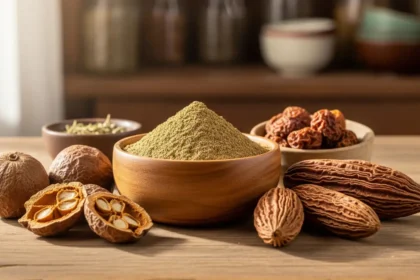
Triphala, meaning “three fruits,” represents Ayurveda’s most revered digestive tonic, combining Amalaki (Indian gooseberry), Bibhitaki (Terminalia bellerica), and Haritaki (Terminalia chebula). Unlike harsh laxatives that can create dependency, Triphala works by strengthening and toning your digestive system while gently encouraging natural elimination.
Haritaki, often called the “king of medicines,” specifically balances Vata and has potent laxative properties.
Amalaki provides cooling properties that reduce inflammation in the digestive tract, while Bibhitaki contains high fiber content and works as the strongest laxative among the three fruits.
Traditional preparation: Mix ½ to 1 teaspoon of Triphala powder in warm water and drink before bed. The timing is important—nighttime allows Triphala to work gently throughout the night, supporting morning elimination.
Enhanced absorption method: Some people find better results mixing Triphala with warm ghee (clarified butter) rather than water. Ghee helps carry the medicine deeper into tissues while providing lubrication for dry, hard stools.
Essential Herbs for Chronic Constipation Relief
Isabgol (Psyllium Husk): The Gentle Bulk Former
Psyllium husk, known as Isabgol in Ayurveda, provides soluble fiber that absorbs water and creates soft, well-formed stools. Unlike harsh laxatives, Isabgol works by adding healthy bulk while lubricating the intestinal tract.
Proper usage: Mix 1-2 teaspoons of Isabgol in a large glass of water, stir quickly, and drink immediately before it forms a gel. Follow with another glass of water. The key is adequate water intake—without sufficient water, Isabgol can actually worsen constipation.
Castor Oil: The Traditional Purgative
Castor oil (Ricinus communis), known as Eranda in Sanskrit, has been used for thousands of years as a powerful but gentle purgative. Its active compound, ricinoleic acid, stimulates the colon and encourages strong elimination within 6-12 hours.
Safety note: Use castor oil only occasionally for severe constipation, not as a daily remedy. Take 1-2 teaspoons with warm water or ginger tea on an empty stomach.
Herbal Solutions by Constipation Type
| Constipation Type | Primary Herbs | Supporting Remedies | Best Timing |
|---|---|---|---|
| Vata (Dry, Hard) | Triphala, Haritaki, Sesame oil | Warm ghee, ginger tea | Before bed |
| Kapha (Sluggish) | Ginger, Black pepper, Ajwain | Warm water, light foods | Morning |
| Pitta (Inflamed) | Amalaki, Aloe vera, Fennel | Cool water, coconut water | Evening |
Supportive Dietary and Lifestyle Practices
Warm, oily foods specifically counter the cold, dry qualities of Vata that contribute to constipation. Include ghee (clarified butter) in your daily diet—it lubricates the intestinal tract while carrying nutrients deep into tissues. Start with 1 teaspoon ghee in warm milk before bed.
Fiber-rich foods should be cooked rather than raw for better digestibility. Soaked prunes, figs, and raisins provide natural sugars and fiber that encourage elimination. Soak 3-4 prunes overnight and eat them first thing in the morning with the soaking water.
Warm water practices are crucial. Drink a large glass of warm water immediately upon waking to stimulate the gastrocolic reflex—your body’s natural urge to eliminate after eating or drinking.
Movement and Stress Management
Gentle, regular movement stimulates peristalsis and supports healthy Vata flow. Walking for 20-30 minutes daily, especially after meals, aids digestion and elimination. Abdominal massage using warm sesame oil in clockwise circles for 5-10 minutes before bed stimulates blood flow to digestive organs.
Chronic stress significantly worsens constipation by disrupting Vata and weakening Agni. Pranayama (breathing exercises) particularly help regulate Vata. Practice Nadi Shodhana (alternate nostril breathing) for 5-10 minutes daily to balance your nervous system.
Creating Your Daily Protocol
Morning Routine
- Upon waking: Large glass of warm water with lemon
- Before breakfast: Ginger tea to stimulate Agni
- With breakfast: Include ghee and warm, cooked foods
Evening Protocol
- Before bed: Triphala powder in warm water or ghee
- Bedtime: Gentle abdominal massage with warm sesame oil
Timeline for Natural Relief
Week 1-2: Focus on establishing routine, improving Agni with ginger, and beginning gentle herbs like Triphala. You may notice improved energy and appetite before bowel movements regulate.
Week 3-4: As Agni strengthens and Vata begins to balance, elimination patterns typically become more regular. This is when most people notice significant improvement.
Month 2-3: With consistent practice, healthy elimination becomes natural rather than dependent on supplements. The goal is creating sustainable patterns that work long-term.
When to Seek Additional Support
While Ayurvedic approaches are gentle and effective for most chronic constipation, certain situations require professional attention. Seek medical evaluation if constipation is accompanied by severe abdominal pain, blood in stools, unexplained weight loss, or sudden changes in bowel patterns.
Consider working with an Ayurvedic practitioner if you have complex digestive issues or want deeper constitutional balancing that addresses the root causes of your tendency toward constipation.
The Path to Digestive Freedom
Healing chronic constipation through Ayurveda requires patience and consistency, but the results are typically more lasting than quick-fix approaches. Unlike harsh laxatives that can create dependency, Ayurvedic methods work by restoring your body’s natural ability to eliminate regularly and comfortably.
Your digestive system has its own wisdom and rhythm. These ancient practices help you reconnect with that wisdom, supporting your body’s innate healing abilities rather than overriding them. With time and gentle persistence, what once felt like a chronic struggle can transform into smooth, natural functioning that supports your overall health and vitality.
The goal isn’t just regular bowel movements—it’s creating a digestive system that works harmoniously, supporting your energy, mood, and overall well-being for years to come.
Medical Disclaimer : The content on this Site is for informational purposes only and is not intended to be a substitute for professional medical advice, diagnosis, or treatment.Always seek the advice of your physician or another qualified health provider with any questions you may have regarding your health or a medical condition.Never disregard professional medical advice or delay in seeking it because of something you have read, seen, or interpreted on this website. If issues persist or worsen, definitely check with a healthcare provider who can help you address any underlying concerns.