
In our fast-paced world, the concepts of “love” and “care” are often directed outward—towards our families, our work, our responsibilities. We pour ourselves into the world, and in doing so, we often leave our own cups empty. What if one of the most profound acts of self-care was also one of the most simple?
Enter Abhyanga, the ancient Ayurvedic practice of self-massage with warm oil.
This is not a luxury treatment reserved for a spa day; it is a foundational pillar of the Ayurvedic daily routine (Dinacharya). The Sanskrit word for oil, Sneha, is also the word for love. Therefore, the act of anointing the body with warm oil is seen as a powerful expression of self-love and nourishment. This guide will walk you through how to do Abhyanga as a simple, transformative ritual to soothe your nervous system, nourish your skin, and deeply reconnect with your body.
The Ayurvedic View: Why Oil is Medicine
To understand Abhyanga, we must understand the primary dosha it pacifies: Vata. Vata is the energy of air and space, and its qualities are dry, light, cold, rough, and mobile. The modern lifestyle—with its constant stimulation, packed schedules, and digital overload—is a recipe for high Vata. When Vata is out of balance, it manifests as anxiety, dry skin, restlessness, a racing mind, and stiff joints.
Warm oil is the perfect antidote. Its qualities are heavy, smooth, warm, and moist—the direct opposites of Vata’s. When you perform Abhyanga, you are not just moisturizing your skin; you are applying a medicinal balm that deeply calms the nervous system, which is the primary seat of Vata dosha. The oil penetrates the skin, nourishes the deeper tissues (dhatus), and creates a protective energetic buffer that helps you navigate the stresses of the day with more grace and stability.
The Science-Backed Benefits of Abhyanga
While the wisdom is ancient, the benefits are timeless and increasingly validated by modern science.
- Deeply Nourishes the Skin: The oil moisturizes the skin far more effectively than water-based lotions, improving skin tone and softness.
- Calms the Nervous System: The rhythmic, gentle strokes are deeply relaxing, helping to reduce stress and anxiety by soothing nerve endings.
- Improves Circulation: The massage stimulates blood flow to the muscles and lymphatic circulation, which aids in the removal of metabolic waste.
- Lubricates the Joints: The oil helps to nourish and lubricate the joints, reducing stiffness and improving flexibility.
- Promotes Better Sleep: When performed in the evening, Abhyanga can be a powerful ritual to calm the mind and prepare the body for deep, restful sleep.
- Enhances Mind-Body Connection: The simple act of paying loving attention to your own body fosters a profound sense of presence and self-awareness.
Choosing the Right Oil for Your Dosha
Selecting the right oil enhances the therapeutic benefits of the practice. Always choose high-quality, organic, cold-pressed oils.
- For Vata (Dry Skin, Anxiety, Restlessness): Sesame Oil is the king. It is warming, heavy, and deeply nourishing.
- For Pitta (Sensitive Skin, Inflammation, Heat): Coconut Oil is the best choice. It is cooling, soothing, and anti-inflammatory. Sunflower oil is also a good option.
- For Kapha (Oily Skin, Sluggishness): A lighter, more stimulating oil is needed. Sweet Almond Oil or even a small amount of sesame oil can be used. For Kapha, the massage should be more vigorous to stimulate circulation.
A Step-by-Step Guide to Performing Abhyanga
Set aside 10-15 minutes for this practice. The ideal time is in the morning before you shower.
Step 1: Prepare Your Sanctuary
- Choose a warm, comfortable room where you won’t be disturbed, like your bathroom. Lay down an old towel that you can dedicate to this practice, as oil can stain.
Step 2: Warm Your Oil
- Pour about 1/4 cup of your chosen oil into a heat-safe bottle or container.
- Place the container in a mug or bowl of hot water from the tap for 5-10 minutes. The oil should be comfortably warm to the touch, not hot.
Step 3: The Massage
- Sit or stand comfortably on your dedicated towel. Pour a small amount of warm oil into your hands and rub them together.
- Start with your head: Apply oil to the crown of your head (the adhipati marma) and massage in small, circular motions as if you were shampooing your hair.
- Face and Ears: Gently massage your face and don’t forget your ears. The ears are a major seat of Vata, and massaging them with oil is incredibly calming.
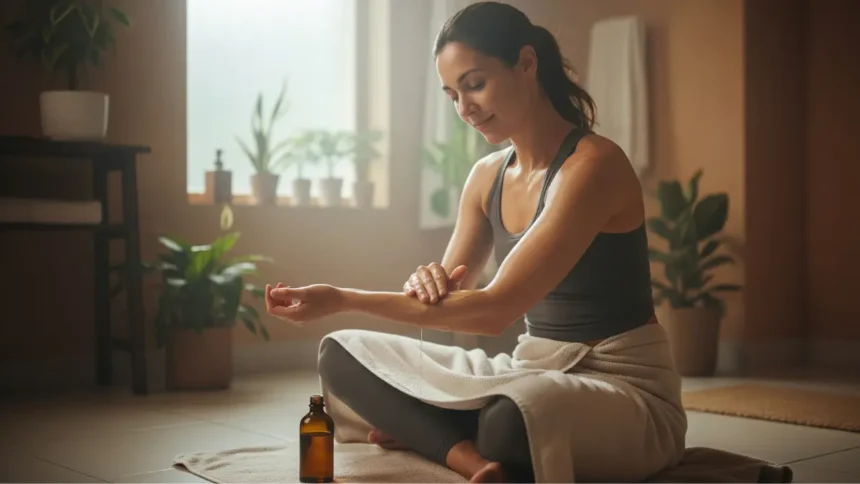
- Limbs (Arms and Legs): Use long, sweeping strokes on your long bones (forearms, shins) and circular strokes on your joints (elbows, knees). Always massage in the direction of your heart.
- Torso: Use large, circular, clockwise motions over your abdomen. This follows the natural path of digestion. Use gentle, straight strokes over your chest and heart.
- Back and Hips: Do the best you can to reach your back. Use circular motions on your hips and lower back.
- Feet (The Grand Finale): Spend extra time on your feet. They are a crucial point of connection to the earth and contain many vital energy points. Massage the soles and each toe with focused attention.
Step 4: Allow the Oil to Absorb
- After you have oiled your entire body, sit and relax for at least 5-10 minutes. This is a perfect time for a short meditation or some gentle breathing exercises. This “rest” period allows the oil and its loving qualities to penetrate the deeper layers of your tissues.
Step 5: A Warm Shower or Bath
- Take a warm (not hot) shower. You do not need to use soap aggressively. The goal is to rinse off the excess oil, leaving a thin, nourishing layer on your skin.
- Use a light, natural soap only where needed. When you get out, simply pat your skin dry with a towel. You will feel no need for lotion.
A Ritual of Deep Connection
Learning how to do Abhyanga is more than learning a massage technique; it is a practice of radical self-care. It is a dedicated time to quiet the outside world and turn your attention inward. In this simple act of anointing your body with love and warmth, you are not just nourishing your skin—you are nourishing your very soul, creating a resilient, peaceful center that will stay with you long after the oil has been absorbed.
Medical Disclaimer : The content on this Site is for informational purposes only and is not intended to be a substitute for professional medical advice, diagnosis, or treatment.Always seek the advice of your physician or another qualified health provider with any questions you may have regarding your health or a medical condition.Never disregard professional medical advice or delay in seeking it because of something you have read, seen, or interpreted on this website.